


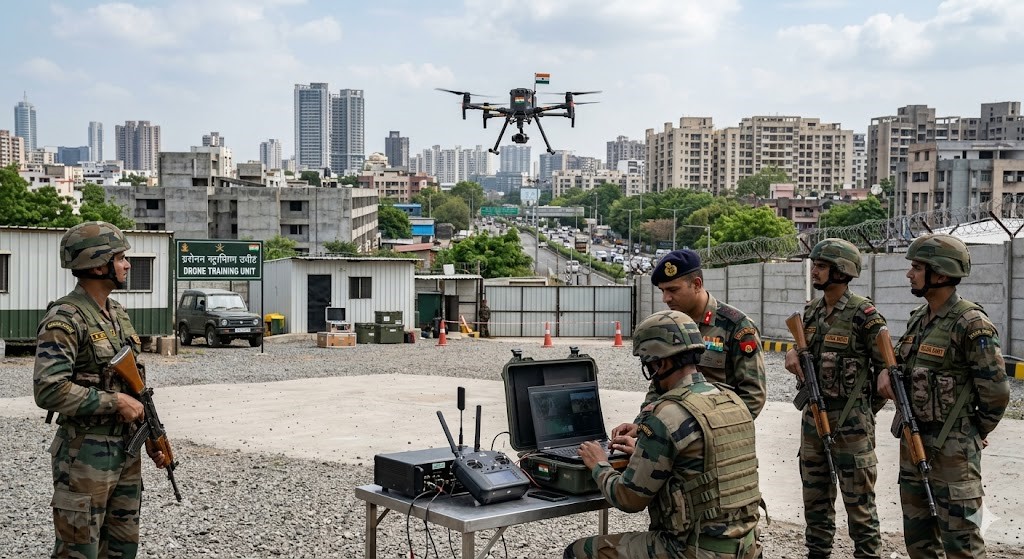
The Central Industrial Security Force (CISF) and the Indian Army have jointly conducted advanced drone training to bolster urban security management, focusing on operational readiness and technological proficiency in drone and anti-drone systems.
This collaboration took place at the Army War College in Madhya Pradesh, where CISF personnel received specialised training on drone operations, security protocols, and flight safety regulations. The programme underscores the increasing importance of modern technology in security frameworks, especially given the rising threats of drone and cyberattacks on critical infrastructure.
The initiative not only enhances the technical skills of security personnel but also aligns with strategic plans to establish dedicated drone and anti-drone capability centres across key regions, including at Behror in Rajasthan. These centres aim to improve rapid response capabilities against aerial threats at vital locations such as airports, ports, and industrial zones.
The importance of drone technology in urban security
Urban security management has been evolving with the integration of aviation technology, especially as threats from unauthorised drones become more sophisticated. The CISF now plays a crucial role in aerial threat management, tasked with safeguarding airports, power plants, and government installations. Its responsibilities have expanded to include monitoring and neutralising potential drone intrusions, especially given the vulnerabilities of high-profile infrastructure.
The union government’s approval to establish the Remote Pilot Training Organisation signals a significant policy move towards standardising drone operations and anti-drone responses nationwide. This organisational development aims to prepare security forces for emerging threats, ensuring swift and efficient handling of aerial security breaches.
The growing emphasis on drone technology highlights a strategic shift in urban security paradigms, seeking to leverage technological advancements for proactive threat detection and response. Such measures are vital for protecting critical infrastructure amid increasing security challenges posed by drone-enabled assaults or cyber threats targeting digital and physical assets.
Future prospects and ongoing efforts
As part of its comprehensive security strategy, CISF continues to expand its drone and anti-drone infrastructure, aiming for nationwide coverage. The force’s existing responsibilities—covering over 70 airports and several key government projects—are complemented by ongoing capacity-building initiatives, including training sessions and specialised units dedicated to aerial surveillance and threat mitigation.
Continued investment in modern security technologies, coupled with strategic collaboration with the Indian Army, is expected to strengthen the national security framework, especially in urban centres vulnerable to new forms of threats. The focus remains on creating a multi-layered defence system capable of rapidly adapting to evolving challenges.
Looking ahead, institutionalising drone proficiency among security personnel will be key to maintaining safety and resilience. Greater integration of drone surveillance into urban security networks could serve as a model for other regions, fostering a more secure urban environment in India.